Introduction
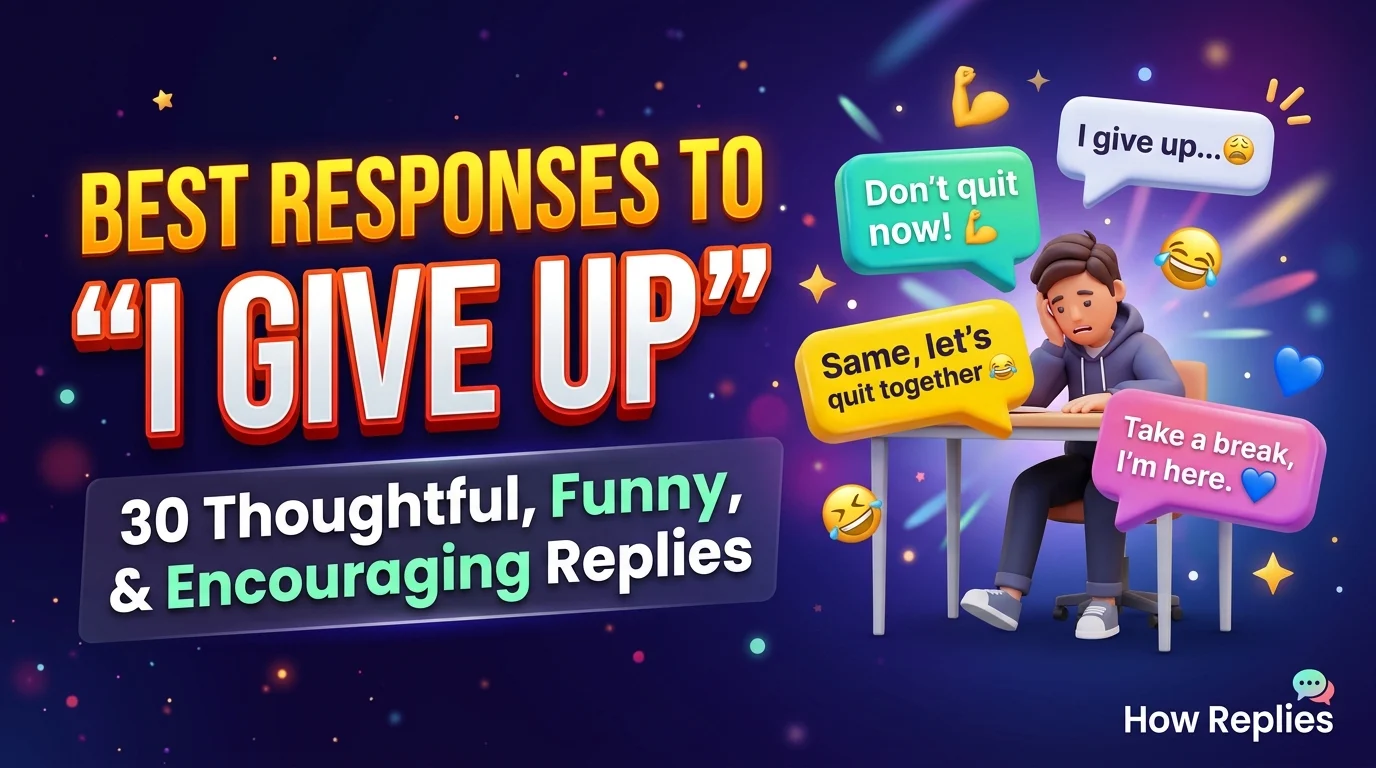
Finding the best responses to I give up can help you comfort someone who feels frustrated, encourage a friend who has lost motivation, or respond humorously when someone is joking about a difficult situation. When a person says “I give up,” they might be struggling with work, facing a personal challenge, feeling mentally exhausted, or simply having a bad day. The right words can help them feel understood and make the conversation more meaningful.
Whether you need supportive replies, motivational messages, funny comebacks, or thoughtful responses, choosing the right words depends on the situation and your relationship with that person. Sometimes, encouragement is helpful; other times, listening, offering practical assistance, or allowing someone to rest is the better choice. Below are 30 useful ways to respond to “I give up,” with real-life examples for texting, friendships, relationships, school, and work.
Quick Answer: What Is the Best Response to “I Give Up”?
The best response is one that matches the person’s feelings and situation. You can say, “Don’t give up just yet. You’ve already come so far,” to encourage them or “Take a break, not a defeat” when they feel exhausted.
For a funny situation, try “Giving up already? The plot twist hasn’t even arrived!” If the person seems genuinely upset, choose a compassionate response such as “I’m here for you. Want to talk about it?”
1. “Don’t Give Up Just Yet”
This is one of the most encouraging responses when someone feels like quitting. It reminds them that their current difficulty doesn’t have to be the end of their efforts. Offer encouragement without making them feel pressured.
Best for: Friends, students, coworkers, and loved ones facing a temporary setback.
Alternative: “You’re closer than you think.”
Examples:
“Don’t give up just yet. You’ve already come this far, and I believe you can finish this.”
“Give yourself another chance. You might be closer to finding the answer than you realize.”
2. “Take a Break, Not a Defeat”
Sometimes, people say “I give up” because they are mentally exhausted. Reminding them to rest can help them regain perspective without treating their tiredness as failure.
Best for: Someone feeling overwhelmed, stressed, or burned out.
Alternative: “Rest first, then decide what comes next.”
Examples:
“Take a short break and come back refreshed. You don’t have to solve everything right now.”
“Sometimes a little rest changes everything. Give yourself permission to breathe.”
3. “You’ve Handled Harder Things Before”
Reminding someone of previous challenges can help rebuild their confidence. It shows them that one difficult situation doesn’t erase the strength they’ve demonstrated in the past.
Best for: Someone who needs reassurance after repeated setbacks.
Alternative: “You’ve overcome bigger challenges before.”
Examples:
“Remember what you overcame last year? You’ve shown how strong you can be.”
“This challenge is difficult, but don’t forget how much you’ve already learned.”
4. “Let’s Figure It Out Together”
Offering teamwork is often more helpful than giving someone another motivational speech. This response lets them know they don’t have to face the problem alone.
Best for: Friends, partners, classmates, and coworkers who need practical assistance.
Alternative: “Two minds are better than one.”
Examples:
“Let’s figure it out together. I’ll help you work through the difficult parts.”
“You don’t have to handle everything alone. We can look for a solution together.”
5. “Every Mistake Teaches Something”
People sometimes want to quit because they believe making mistakes means they aren’t good enough. This reply encourages a growth mindset by treating mistakes as opportunities to learn.
Best for: Students, beginners, job seekers, and anyone learning a new skill.
Alternative: “Failure is part of learning.”
Examples:
“Every expert started as a beginner. You’re learning, not losing.”
“This attempt didn’t work, but now you know what to change next time.”
6. “One More Try Won’t Hurt”
A gentle invitation to try again can help someone regain momentum. However, make sure the person is willing to continue rather than pushing them when they genuinely need a break.
Best for: Friendly competitions, puzzles, assignments, and manageable challenges.
Alternative: “Give it one last shot.”
Examples:
“Try it one more time. You might surprise yourself.”
“Let’s make one final attempt together, and then we can decide what to do next.”
7. “I Believe in You”
Sometimes, the simplest words have the greatest emotional impact. Telling someone you believe in them can provide reassurance when they have lost confidence in their abilities.
Best for: Close friends, romantic partners, family members, and loved ones.
Alternative: “You’ve got this, and I’m rooting for you.”
Examples:
“I know you’re capable of more than you realize, and I believe in you.”
“Even when you doubt yourself, remember that you have people who believe in you.”
8. “What’s Making You Feel This Way?”
Instead of immediately offering advice, ask what is causing the frustration. An open-ended question helps you understand the situation and shows that you’re willing to listen.
Best for: Supportive conversations with someone who seems upset or discouraged.
Alternative: “Want to talk about it?”
Examples:
“What’s making you feel this way? Tell me what’s been frustrating you.”
“I’m here to listen. You can tell me what’s going on without worrying about being judged.”
9. “Let’s Solve It One Step at a Time”
Large problems can feel impossible when everything needs attention at once. Breaking a challenge into smaller tasks makes it easier to identify a manageable next step.
Best for: Work projects, studying, personal goals, and overwhelming responsibilities.
Alternative: “Break it into smaller pieces.”
Examples:
“Let’s start with the easiest part and work our way through the rest.”
“You don’t have to finish everything today. Small steps can lead to meaningful progress.”
10. “You’re Allowed to Feel Frustrated”
A person who feels defeated may need emotional validation more than advice. Acknowledging their feelings can help them feel understood instead of judged.
Best for: Emotional conversations, stressful days, and disappointing experiences.
Alternative: “It’s okay to feel overwhelmed.”
Examples:
“Anyone dealing with this much pressure could feel frustrated. Your feelings matter.”
“You don’t have to pretend everything is fine. It’s okay to admit that you’re struggling.”
11. “Tomorrow Is Another Chance”
When someone has had a difficult day, reminding them that tomorrow offers a fresh start can provide hope. This response is especially useful when there is no urgent need to resolve the problem immediately.
Best for: Someone feeling discouraged at the end of a long day.
Alternative: “Start fresh tomorrow.”
Examples:
“Get some rest and revisit it tomorrow. Things may feel clearer after a break.”
“Today didn’t go as planned, but tomorrow gives you another opportunity to try.”
12. “Don’t Let One Bad Moment Define You”
A disappointing experience doesn’t determine someone’s abilities or future. This response encourages resilience while helping them separate one setback from their overall progress.
Best for: Someone who has made a mistake or experienced a recent disappointment.
Alternative: “One setback doesn’t define your success.”
Examples:
“Everyone has difficult days. This moment doesn’t define who you are.”
“Don’t judge your entire journey by one bad experience. You’ve still got room to grow.”
13. “Maybe You Just Need a Different Approach”
Sometimes, the problem isn’t a lack of effort but an ineffective strategy. Suggesting another approach can help someone see alternatives they might have overlooked.
Best for: Difficult assignments, workplace challenges, and complicated tasks.
Alternative: “Try another strategy.”
Examples:
“You’ve tried this method already. Maybe changing your approach will make things easier.”
“Let’s look at the problem from a fresh perspective and see what we discover.”
14. “Progress Is Better Than Perfection”
Perfectionism can make even small tasks feel impossible. This response reminds someone that gradual improvement is valuable, even when the final result isn’t perfect.
Best for: Perfectionists, creative people, students, and anyone struggling to meet unrealistic expectations.
Alternative: “Done is better than perfect.”
Examples:
“Small progress still counts. You don’t need to get everything right on your first attempt.”
“Keep moving forward instead of waiting for the perfect moment to begin.”
15. “What’s the Worst That Could Happen?”
When fear of failure is holding someone back, gently examining the possible outcomes can help them make a more informed decision. Use this response when the risks are reasonable and the situation is safe.
Best for: Someone hesitating over a manageable challenge or new opportunity.
Alternative: “It’s worth considering another try.”
Examples:
“What’s the worst realistic outcome? You might learn something useful either way.”
“If the risks are manageable, giving it another try could help you discover what you’re capable of.”
16. “You’re Stronger Than This Challenge”
This motivational reply reminds someone that a difficult situation doesn’t automatically mean they cannot handle it. Keep the tone caring so it doesn’t sound like you’re dismissing their struggle.
Best for: Someone who needs encouragement after a setback.
Alternative: “This challenge doesn’t erase your strength.”
Examples:
“You’ve overcome difficult situations before. Give yourself credit for that.”
“Keep believing in yourself, even if the next step feels uncertain.”
17. “Need a Hand?”
Offering practical assistance can turn encouragement into action. Instead of expecting someone to solve everything independently, find out whether there’s a specific way you can help.
Best for: Friends, coworkers, classmates, and family members dealing with practical difficulties.
Alternative: “Can I help you with something?”
Examples:
“Need a hand? Let me take a look, and maybe we can find a solution.”
“Tell me which part is giving you trouble. We can work through it together.”
18. “Giving Up Isn’t Your Style”
This playful and encouraging reply reminds someone of their determination. It works best when you know the person well enough to understand that they appreciate this kind of motivation.
Best for: Close friends and people who enjoy friendly encouragement.
Alternative: “I know you always look for a way forward.”
Examples:
“Come on, I know the determined person you are. Let’s see what other options we have.”
“Giving up already? I thought you were the one who always found a way!”
19. “You’ve Already Made Progress”
When people focus only on what remains unfinished, they may forget what they’ve accomplished. Recognizing their progress can help them appreciate their effort and identify what to do next.
Best for: Long-term projects, personal goals, and repeated attempts at something difficult.
Alternative: “Look how far you’ve come.”
Examples:
“Don’t ignore your achievements. You’ve already completed several important steps.”
“You’re improving, even if the results aren’t as quick as you hoped.”
20. “It’s Okay to Laugh About It”
Humor can make a frustrating situation feel less intense when the person is comfortable joking about it. A lighthearted response can help both of you relax without dismissing the problem.
Best for: Casual conversations, games, minor mistakes, and everyday inconveniences.
Alternative: “Let’s laugh about it and decide what to do next.”
Examples:
“At least this will make a funny story when we’re done struggling with it!”
“We all have moments like this. Let’s laugh, take a breath, and try again if we feel like it.”
21. “Quitting Today Doesn’t Mean Forever”
A temporary pause doesn’t have to mean permanently abandoning a goal. This response helps someone understand that they can take time to recover before deciding what comes next.
Best for: Someone who is exhausted and needs time to reconsider their plans.
Alternative: “Pause instead of making a final decision.”
Examples:
“Take the time you need. You can return to this when you’re ready.”
“Stepping away today doesn’t mean you can never try again.”
22. “Everyone Struggles Sometimes”
People can feel isolated when they believe everyone else is succeeding effortlessly. Reminding them that challenges are a normal part of life can help reduce shame and encourage honest conversation.
Best for: Someone comparing themselves with others or feeling embarrassed about a setback.
Alternative: “You’re not the only one going through a difficult time.”
Examples:
“We all hit rough patches. Struggling doesn’t mean you’re doing everything wrong.”
“Even people who seem confident face challenges you might never see.”
23. “You’ve Got People Cheering for You”
Feeling supported can make difficult experiences easier to manage. This response reminds someone that their friends, family, or support network may be willing to help.
Best for: Friends, partners, teammates, and people pursuing challenging goals.
Alternative: “You’re not alone in this.”
Examples:
“Your friends care about you, and I’m rooting for you too.”
“You have people who want to see you succeed. Let us support you when things get difficult.”
24. “Failure Isn’t the End”
A failed attempt can feel discouraging, but it doesn’t have to be the final chapter. This response encourages someone to see the difference between a disappointing result and their long-term potential.
Best for: Someone recovering from a mistake, rejection, or unsuccessful attempt.
Alternative: “It’s one chapter, not the whole story.”
Examples:
“Success often takes more than one attempt. This result doesn’t have to be the end.”
“You can learn from what happened and decide whether another path makes sense.”
25. “Let’s Celebrate Small Wins”
Recognizing small achievements can help rebuild motivation when a larger goal seems far away. It also encourages a healthier focus on steady progress instead of waiting for one major success.
Best for: Long-term goals, studying, fitness routines, work projects, and personal development.
Alternative: “Every little success matters.”
Examples:
“You finished the first step, and that’s progress worth celebrating.”
“Let’s appreciate what you’ve accomplished today before worrying about everything left to do.”
26. “Maybe This Challenge Is Teaching You Patience”
Some goals require more time than expected, and that delay can be frustrating. This response encourages reflection without suggesting that every difficult experience must have a hidden purpose.
Best for: Someone dealing with slow progress or repeated delays.
Alternative: “Growth takes time, and you can learn as you go.”
Examples:
“You might not see the results yet, but you can still learn something from this experience.”
“Give yourself time to improve. You don’t need to master everything overnight.”
27. “You’ve Inspired Others Before”
Sometimes, people forget the positive impact they’ve had on others. Reminding them of their past contributions can restore perspective and help them recognize their own value.
Best for: Someone who has lost confidence or feels that their efforts don’t matter.
Alternative: “Your effort has made a difference before.”
Examples:
“Don’t forget the times your determination encouraged someone else to keep going.”
“You’ve helped people through difficult moments. You deserve support when you’re struggling too.”
28. “Let’s Change the Plan, Not the Goal”
When a strategy isn’t working, adjusting the approach may be more effective than abandoning an important goal immediately. However, it’s also okay to change the goal if it no longer fits someone’s needs.
Best for: Someone dealing with obstacles in a meaningful project or personal ambition.
Alternative: “Find a new route to the same destination.”
Examples:
“Maybe the current plan isn’t working. Let’s find a different way to reach your goal.”
“Different path, same destination. We can adapt without losing sight of what matters.”
29. “You’re Closer Than You Realize”
When someone has invested considerable effort, they may underestimate their progress. This response can encourage them to review what they’ve accomplished before deciding whether to continue.
Best for: Someone approaching a milestone or working through a challenging final stage.
Alternative: “Look at how much you’ve already achieved.”
Examples:
“Don’t stop to judge yourself before you’ve looked at the progress you’ve made.”
“You might be closer than you think, but let’s look at what’s left and decide on the next step.”
30. “Whatever You Decide, I’ll Respect You”
Not every situation calls for another attempt. Sometimes, someone needs reassurance that their decision will be respected, whether they choose to continue, pause, or move in a different direction.
Best for: Sensitive conversations, major personal decisions, and someone who feels pressured by others.
Alternative: “I’ll support you while you decide what’s best for you.”
Examples:
“I hope things get easier, but I’ll respect your decision and listen if you need to talk.”
“You matter to me more than whether you continue with this particular plan. Let’s figure out what is right for you.”
FAQs About the Best Responses to “I Give Up”
1. What is the best response to “I give up”?
One of the best responses is, “Don’t give up just yet. You’ve already come this far, and I believe in you.” If the person is exhausted, “Take a break, not a defeat” may be more appropriate. Choose a response that fits their emotions and circumstances.
2. How do you comfort someone who says they give up?
Start by listening without judgment and acknowledging their feelings. Ask what is making the situation difficult, then offer encouragement or practical help if they want it. Avoid criticizing them or assuming that they simply need to try harder.
3. Can I respond with humor when someone says “I give up”?
Yes, when the situation is lighthearted and the person appreciates jokes. You could say, “You can’t quit before the plot twist!” or “The quitting department is temporarily closed!” If the person seems genuinely distressed, choose empathy over humor.
4. What should I avoid saying when someone wants to give up?
Avoid dismissive phrases such as “Just get over it,” “Stop being dramatic,” or “You never try hard enough.” These comments can make someone feel misunderstood. Instead, acknowledge their frustration and ask what kind of support would help.
5. Why do people say “I give up”?
People may say it when they feel frustrated, overwhelmed, disappointed, exhausted, or uncertain about what to do next. Sometimes it’s a joke; other times, it signals genuine emotional distress. Consider the context and ask a gentle follow-up question if you’re unsure.
Conclusion
Finding the best responses to I give up means knowing when to encourage, when to listen, and when to offer practical assistance. A motivational message such as “You’ve handled harder things before” may help someone regain confidence, while a compassionate reply like “You don’t have to go through this alone” can provide emotional reassurance.
For casual situations, funny comebacks can lighten the mood. When someone feels genuinely overwhelmed, however, empathy and patience matter more than clever words. Remember that taking a break or choosing a different direction isn’t always failure. The goal is to make the person feel heard, respected, and supported.
Which response would you use when someone says “I give up”? Share your favorite supportive message or funny comeback, and save these examples for the next time you need the right words.

I’m Amelia Jane, a passionate writer who loves creating helpful and thoughtful replies. I focus on making conversations easier by sharing simple, natural, and meaningful responses for everyone.