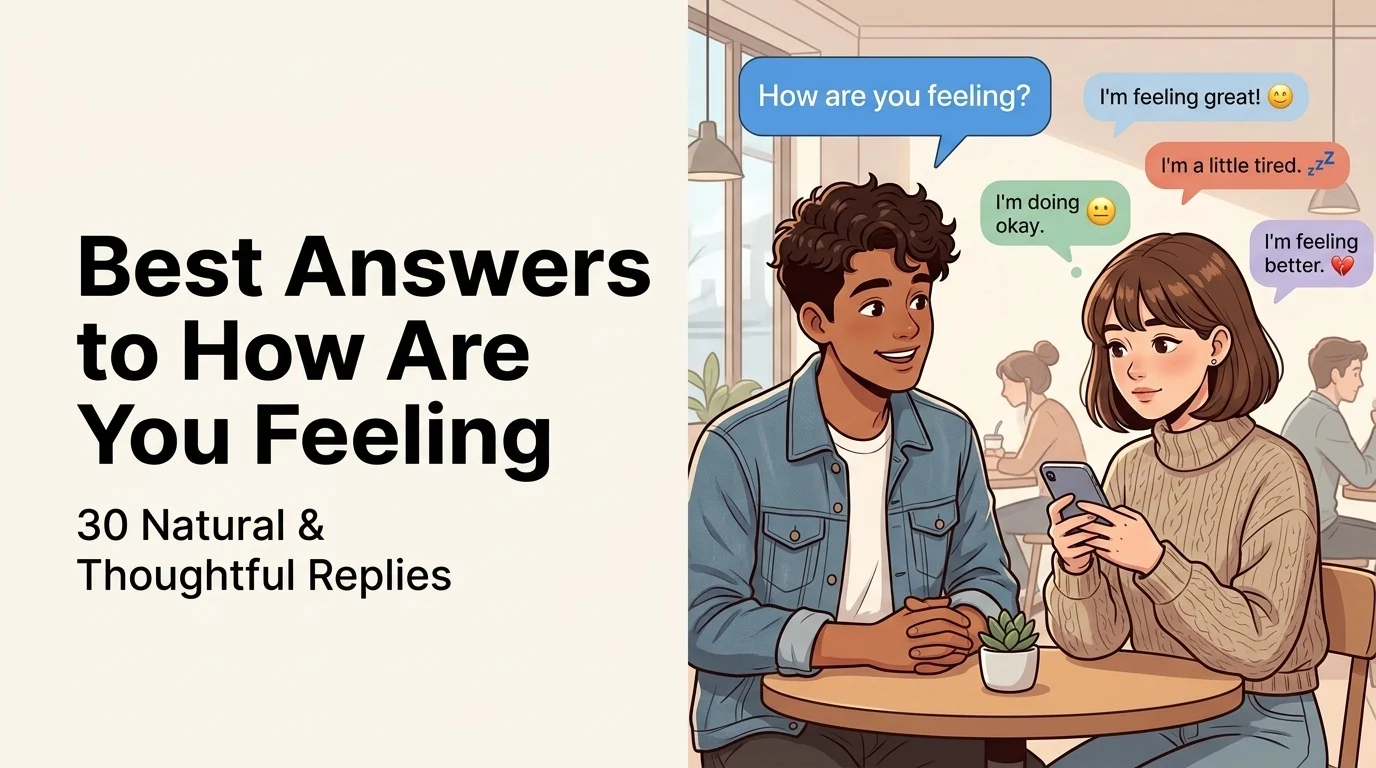
When someone asks “How are you feeling?”, they may simply be checking on you, showing concern, or trying to start a meaningful conversation. Your answer can be as simple as “I’m feeling good” or more honest and detailed, depending on the situation and how comfortable you are sharing.
The best answers to “How are you feeling?” sound natural rather than rehearsed. Whether you are feeling happy, tired, nervous, confused, excited, or simply okay, the right response helps you communicate clearly while keeping the conversation comfortable.
Quick Answer for Audience
A good answer depends on your mood and the person asking. Try responses like:
- “I’m feeling pretty good today, thanks for asking.”
- “I’m a little tired, but overall I’m okay.”
- “Honestly, I’ve been feeling a bit stressed lately.”
- “I’m feeling great! Today has been a really good day.”
- “I’m not completely sure how I feel yet, but I’m okay.”
1. When You’re Feeling Good
If you are genuinely doing well, keep your response positive and natural. You do not need to give a long explanation.
Best for: Friends, classmates, family, and casual conversations.
Alternative: “I’m doing really well today.”
Examples:
“I’m feeling pretty good today, thanks for asking.”
“I’m doing great and feeling positive.”
2. When You’re Feeling Happy
When you are in a cheerful mood, let your answer show some of that energy.
Best for: Sharing a positive mood.
Alternative: “I’m feeling really happy today!”
Examples:
“I’m feeling amazing today.”
“I’m in a really good mood right now.”
3. When You’re Feeling Tired
You can be honest about being tired without making the conversation negative.
Best for: When you have had a busy or exhausting day.
Alternative: “I’m a little worn out.”
Examples:
“I’m pretty tired, but I’m doing okay.”
“I’ve had a long day, so I’m feeling a bit exhausted.”
4. When You’re Feeling Sad
You do not have to pretend everything is fine. A simple, honest answer is enough.
Best for: When you want someone to understand your mood.
Alternative: “I’m feeling a little down today.”
Examples:
“I’m not feeling my best today.”
“I’ve been feeling a little sad lately.”
5. When You’re Feeling Stressed
Stress can make it difficult to explain exactly what is wrong. Keep your answer simple.
Best for: School, work, deadlines, or busy situations.
Alternative: “I’ve got a lot on my mind.”
Examples:
“I’m feeling a little stressed right now.”
“There’s a lot going on, but I’m managing.”
6. When You’re Feeling Nervous
If you are nervous about something coming up, you can acknowledge it without overexplaining.
Best for: Tests, presentations, competitions, or important events.
Alternative: “I’m a little anxious about it.”
Examples:
“I’m feeling nervous, but I think I’ll be okay.”
“I’ve got some nerves, but I’m trying to stay calm.”
7. When You’re Feeling Excited
An exciting answer can naturally encourage the other person to ask what happened.
Best for: Sharing good news or upcoming plans.
Alternative: “I’m really excited right now!”
Examples:
“I’m feeling fantastic—I’ve got something exciting coming up.”
“I’m in a great mood because something good happened.”
8. When You’re Feeling Confused
Sometimes you genuinely do not know what you are feeling. That is a perfectly reasonable answer.
Best for: Unclear or mixed emotions.
Alternative: “I’m still figuring out how I feel.”
Examples:
“I’m honestly a little confused about my feelings.”
“I’m not completely sure yet, but I’m thinking about it.”
9. When You’re Feeling Okay
“Okay” is a simple and useful response when you do not want to share much.
Best for: Casual conversations and quick replies.
Alternative: “I’m doing alright.”
Examples:
“I’m okay, just taking things one day at a time.”
“I’m doing alright, thanks for checking in.”
10. When You’re Feeling Great
If you are having an especially good day, you can make your answer more enthusiastic.
Best for: Positive conversations.
Alternative: “I’m feeling fantastic!”
Examples:
“I’m feeling great today!”
“I’m honestly having a really good day.”
11. When You Don’t Want to Talk About It
You are allowed to keep your feelings private. A polite boundary can end the topic without being rude.
Best for: When you need personal space.
Alternative: “I’d rather not talk about it right now.”
Examples:
“I appreciate you asking, but I’m not ready to discuss it.”
“I’m okay, but I’d rather keep it private for now.”
12. When Someone Is Genuinely Concerned
If someone seems worried about you, a slightly more thoughtful response can reassure them.
Best for: Family members, close friends, or supportive people.
Alternative: “Thanks for checking on me.”
Examples:
“I’m doing okay, and I really appreciate you asking.”
“I’ve had a difficult day, but I’m getting through it.”
13. When You Want to Sound Casual
Casual answers work well in everyday conversations.
Best for: Friends and informal chats.
Alternative: “I’m good, just chilling.”
Examples:
“I’m doing pretty good.”
“I’m alright, just taking it easy.”
14. When You Want to Sound Positive
A positive response can keep the conversation light even if your day has not been perfect.
Best for: Friendly conversations.
Alternative: “I’m doing well and staying positive.”
Examples:
“I’m feeling good and focusing on the positives.”
“I’m doing alright and trying to enjoy the day.”
15. When You’re Having a Bad Day
You can be honest while still keeping your response brief.
Best for: When you are struggling but do not want to explain everything.
Alternative: “Today hasn’t been the easiest.”
Examples:
“I’m having a rough day, honestly.”
“I’m not feeling great today, but hopefully tomorrow is better.”
16. When You’re Feeling Relieved
Relief is a useful emotion to mention when something stressful has finally passed.
Best for: After finishing a difficult task or solving a problem.
Alternative: “I’m feeling much better now.”
Examples:
“I’m really relieved that everything worked out.”
“I feel a lot lighter now that it’s over.”
17. When You’re Feeling Proud
If you accomplished something meaningful, you can share that feeling naturally.
Best for: Achievements and personal progress.
Alternative: “I’m feeling proud of myself.”
Examples:
“I’m pretty proud of how things turned out.”
“I worked hard, so I’m feeling good about it.”
18. When You’re Feeling Grateful
Gratitude can turn a simple answer into a meaningful conversation.
Best for: Reflective or positive moments.
Alternative: “I’m feeling thankful today.”
Examples:
“I’m feeling grateful for the people around me.”
“I’ve had a lot to appreciate today.”
19. When You’re Feeling Calm
If you feel relaxed, say so directly.
Best for: Peaceful moments and relaxed conversations.
Alternative: “I’m feeling pretty relaxed.”
Examples:
“I’m feeling calm and comfortable today.”
“I’m in a peaceful mood right now.”
20. When You’re Feeling Motivated
A motivated response can communicate energy and confidence.
Best for: Starting a project, studying, practicing, or pursuing a goal.
Alternative: “I’m feeling ready to get things done.”
Examples:
“I’m feeling motivated to make today productive.”
“I’ve got plenty of energy and motivation today.”
21. When You’re Feeling Lonely
You can gently let someone know that you would appreciate company.
Best for: Talking honestly with someone you trust.
Alternative: “I’ve been feeling a little alone lately.”
Examples:
“I’m feeling a bit lonely today.”
“I could really use some company right now.”
22. When You’re Feeling Overwhelmed
When everything seems like too much, a straightforward answer can help others understand.
Best for: Busy or emotionally difficult situations.
Alternative: “I have a lot going on right now.”
Examples:
“I’m feeling a little overwhelmed with everything.”
“There’s a lot on my mind at the moment.”
23. When You’re Feeling Unsure
Sometimes your emotions are mixed, and there is no single word that describes them.
Best for: Complicated situations.
Alternative: “I have mixed feelings about everything.”
Examples:
“I’m feeling unsure about what comes next.”
“I have a lot of different emotions right now.”
24. When You Want to Keep the Conversation Going
You can answer and then return the question to the other person.
Best for: Friendly conversations and building connection.
Alternative: “I’m doing well. How are you feeling?”
Examples:
“I’m feeling pretty good. What about you?”
“I’m alright today—how have you been feeling?”
25. When You Want to Sound Thoughtful
A thoughtful response can show that you have actually considered your emotions.
Best for: Meaningful conversations.
Alternative: “I’ve been reflecting on things lately.”
Examples:
“I’m feeling a little reflective today.”
“I’ve been thinking about a lot, so my feelings are mixed.”
26. When You’re Feeling Hopeful
Hopeful language works well when things are improving.
Best for: New beginnings and positive changes.
Alternative: “I’m feeling optimistic.”
Examples:
“I’m feeling hopeful about what’s ahead.”
“I think things are moving in a better direction.”
27. When You’re Feeling Disappointed
You can acknowledge disappointment without becoming overly negative.
Best for: When something did not go as planned.
Alternative: “I’m a little disappointed, honestly.”
Examples:
“I’m disappointed with how things turned out.”
“I was hoping for a different result, so I’m a little down.”
28. When You Want a Short Text Reply
Text conversations often work better with short, natural answers.
Best for: Messaging and quick chats.
Alternative: “Good, you?”
Examples:
“Doing okay, thanks!”
“Pretty good 😊 How about you?”
29. When You Want to Be Honest but Brief
You can communicate your mood without giving someone your entire story.
Best for: Situations where you want honesty and privacy.
Alternative: “I’m managing, thanks for asking.”
Examples:
“I’ve had better days, but I’m okay.”
“I’m a little off today, but I’ll be alright.”
30. When You Want the Most Natural Answer
The best response is usually the one that matches how you genuinely feel. You do not need a perfect phrase.
Best for: Almost any situation.
Alternative: “Honestly, I’m feeling…” followed by your real emotion.
Examples:
“Honestly, I’m feeling pretty good today.”
“I’m not sure how I feel yet, but I appreciate you asking.”
Frequently Asked Questions
1. What is the best answer to “How are you feeling?”
The best answer depends on your actual mood. You can say, “I’m feeling good,” “I’m a little tired,” or “I’m not doing my best today.”
2. How do you answer “How are you feeling?” in a text?
Keep it natural and short. Try “I’m doing okay, thanks! How about you?” or “Pretty good today 😊.”
3. What should I say if I’m not feeling well emotionally?
You can be honest without sharing everything. For example, “I’m having a difficult day, but I appreciate you asking.”
4. How do I answer without sharing personal details?
Set a polite boundary. You could say, “Thanks for asking, but I’d rather not talk about it right now.”
5. Should I ask “How are you?” back?
Yes. If it feels natural, returning the question shows interest and keeps the conversation going.
Conclusion
The best answers to “How are you feeling?” are not necessarily clever or complicated. A simple, genuine response is usually the most effective. Whether you are happy, tired, nervous, stressed, excited, confused, or simply okay, choose words that honestly match your mood and the situation.
Remember, you also have control over how much you share. A short answer is perfectly fine, while a more open response can create a deeper conversation with someone you trust. Most importantly, answer naturally, be honest when you feel comfortable, and do not feel pressured to explain more than you want to.

I’m Isaiah Michael, a passionate writer at HowReplies, sharing thoughtful, practical, and creative reply ideas to help readers communicate clearly, confidently, and naturally in everyday conversations.