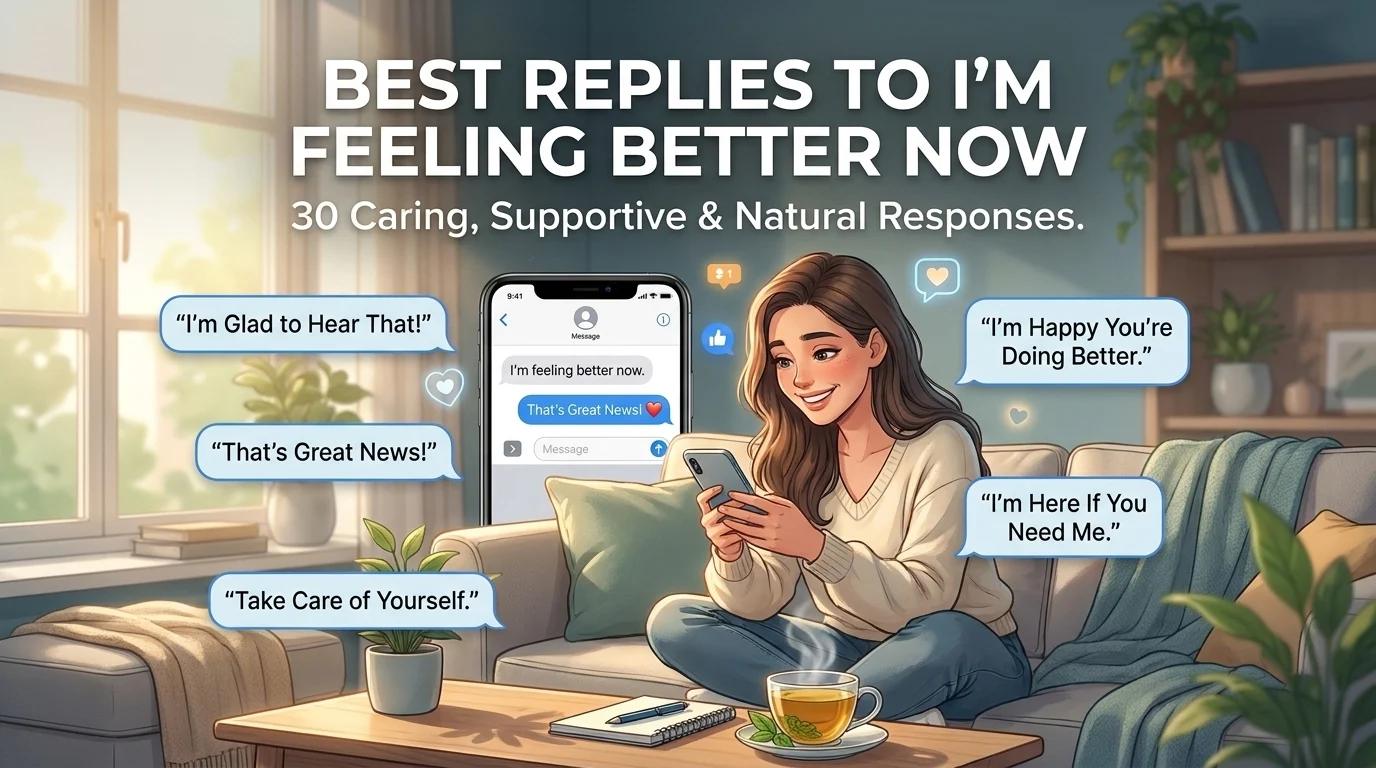
When someone says, “I’m feeling better now,” it usually means they are recovering from a difficult moment, feeling more positive, or simply doing better than they were before. A thoughtful response can acknowledge their improvement and show that you genuinely care without making the conversation feel too serious.
The best reply depends on your relationship with the person and the situation. You might want to sound caring, encouraging, casual, cheerful, or simply relieved. Whether you are replying to a friend, family member, classmate, or someone you know casually, these natural responses can help you keep the conversation warm and supportive.
Quick Answer for Audience
A simple and caring response is: “I’m really glad to hear that! Take care of yourself and keep feeling better.” For something more casual, try: “That’s great news! I’m happy you’re feeling better.”
1. Say “I’m Glad to Hear That”
This is one of the easiest and most natural replies. It shows genuine happiness that the person is doing better.
Best for: Friends, family, classmates, and everyday conversations.
Alternative: “I’m really happy to hear that.”
Examples:
“I’m glad to hear that! That’s great news.”
“I’m really happy you’re feeling better now.”
2. Say “That’s Great News!”
A cheerful response can help reinforce the positive update.
Best for: Casual and friendly conversations.
Alternative: “That’s wonderful to hear!”
Examples:
“That’s great news! I’m glad things are improving.”
“Awesome! I’m really happy you’re doing better.”
3. Say “Take Care of Yourself”
Even when someone feels better, a gentle reminder to look after themselves can be thoughtful.
Best for: Someone recovering from a difficult day or period.
Alternative: “Keep taking good care of yourself.”
Examples:
“I’m glad you’re better. Take care of yourself!”
“Good to hear! Keep taking care of yourself.”
4. Say “I’m Happy You’re Doing Better”
This response directly acknowledges their improvement.
Best for: Caring conversations.
Alternative: “It’s good to know you’re feeling better.”
Examples:
“I’m happy you’re doing better now.”
“That’s really good to hear. I’m glad you’re feeling better.”
5. Say “That’s a Relief”
If you were concerned about the person, this response communicates that you are relieved.
Best for: Close friends and family.
Alternative: “I’m relieved to hear that.”
Examples:
“That’s such a relief. I was hoping you’d feel better soon.”
“I’m really glad to hear that—it’s a relief.”
6. Say “Keep Going”
A short encouraging message can motivate someone to continue taking positive steps.
Best for: Someone going through a challenging period.
Alternative: “Keep moving forward.”
Examples:
“Glad you’re feeling better. Keep going!”
“That’s good to hear. Keep taking things one step at a time.”
7. Say “I’m Here If You Need Me”
This lets the person know they have someone to talk to if they need support.
Best for: Close friends and supportive relationships.
Alternative: “I’m here whenever you need to talk.”
Examples:
“I’m glad you’re feeling better. I’m here if you need anything.”
“Good to hear! You can always reach out if you need someone.”
8. Say “That’s Wonderful”
Sometimes a simple positive reaction is enough.
Best for: Short text conversations.
Alternative: “That’s so good to hear!”
Examples:
“That’s wonderful! I’m happy for you.”
“That’s really good news!”
9. Ask “What Helped?”
If the person wants to talk about their experience, this question gives them an opportunity to share.
Best for: Conversations where you are genuinely curious.
Alternative: “What made things feel better?”
Examples:
“I’m glad you’re better. What helped?”
“That’s great! Was there anything that helped you feel better?”
10. Say “One Step at a Time”
This is a supportive reminder that improvement does not have to happen all at once.
Best for: Someone who has been having a difficult time.
Alternative: “Just keep taking things one step at a time.”
Examples:
“I’m glad you’re feeling better. Just take it one step at a time.”
“Keep going at your own pace.”
11. Say “That Makes Me Happy”
This communicates genuine care without being overly dramatic.
Best for: Close relationships.
Alternative: “Hearing that makes me happy.”
Examples:
“That makes me happy to hear.”
“I’m really happy things are getting better for you.”
12. Say “You Deserve to Feel Better”
This is warm and encouraging without putting pressure on the person.
Best for: Supportive conversations.
Alternative: “I hope things keep getting better.”
Examples:
“I’m glad you’re feeling better. You deserve some good days.”
“I hope you continue feeling better and having easier days.”
13. Say “Keep That Positive Energy”
This works well when the person sounds cheerful.
Best for: Friendly, upbeat conversations.
Alternative: “Keep that good energy going!”
Examples:
“Glad to hear it! Keep that positive energy going.”
“That’s the spirit—keep feeling better!”
14. Say “I Was Hoping You’d Feel Better Soon”
This shows that you remembered what the person was going through.
Best for: Someone you care about.
Alternative: “I was hoping things would improve for you.”
Examples:
“I was hoping you’d feel better soon. I’m glad you do.”
“That’s really good to hear. I was rooting for you.”
15. Say “That’s a Positive Update”
This is a slightly more neutral response.
Best for: Acquaintances or less emotional conversations.
Alternative: “Glad to hear things are improving.”
Examples:
“That’s a positive update. I’m glad you’re doing better.”
“Good to hear things are moving in a better direction.”
16. Say “Glad Things Are Looking Up”
This phrase communicates optimism about the future.
Best for: Friendly conversations.
Alternative: “Hopefully things keep improving.”
Examples:
“I’m glad things are looking up!”
“Great to hear things are getting better.”
17. Say “You Sound Much Better”
This can work when the person’s tone seems noticeably more positive.
Best for: Phone calls or conversations with someone you know well.
Alternative: “You seem to be doing much better.”
Examples:
“You sound much better today!”
“I can tell you’re feeling more positive.”
18. Say “That’s the Update I Wanted to Hear”
This adds a little warmth and enthusiasm.
Best for: Close friends and family.
Alternative: “That’s exactly what I was hoping to hear.”
Examples:
“That’s the update I wanted to hear!”
“Now that’s good news!”
19. Say “Keep Resting If You Need To”
This reminds the person that feeling better does not necessarily mean they need to rush back into everything.
Best for: Someone recovering from a tiring period.
Alternative: “Give yourself time to recharge.”
Examples:
“I’m glad you’re better. Keep resting if you need to.”
“Take it easy and give yourself time to recharge.”
20. Give a Lighthearted Response
If the person sounds completely fine again, a little humor can make the conversation cheerful.
Best for: Friends who enjoy playful conversations.
Alternative: “Look who’s back in action!”
Examples:
“Glad you’re feeling better! Welcome back!”
“Good news—your energy has returned!”
21. Say “That’s Really Good to Hear”
This is warm without sounding overly formal.
Best for: Almost any everyday situation.
Alternative: “I’m really glad to hear that.”
Examples:
“That’s really good to hear!”
“I’m happy things are improving.”
22. Ask “How Are You Feeling Now?”
If you want to continue checking in, this is a natural follow-up.
Best for: Someone who has recently been struggling.
Alternative: “Are you feeling much better now?”
Examples:
“I’m glad you’re better. How are you feeling now?”
“That’s good to hear. How are things now?”
23. Say “I Hope It Stays That Way”
This expresses hope that the person’s improvement continues.
Best for: Supportive conversations.
Alternative: “Hopefully you keep feeling this good.”
Examples:
“I’m glad you’re better. I hope it stays that way.”
“Hopefully things continue getting better for you.”
24. Say “You’ve Got This”
A confidence boost can be useful when someone is moving forward after a difficult period.
Best for: Encouraging friends.
Alternative: “You can handle this.”
Examples:
“Glad you’re feeling better. You’ve got this!”
“Keep going—you’re doing great.”
25. Say “I’m Rooting for You”
This is warm and encouraging without demanding anything from the person.
Best for: Friends and supportive relationships.
Alternative: “I’m cheering you on.”
Examples:
“I’m glad you’re feeling better. I’m rooting for you!”
“Keep going—I’m cheering you on.”
26. Say “Enjoy the Good Day”
This focuses on appreciating the improvement.
Best for: Casual and positive conversations.
Alternative: “Enjoy feeling good again!”
Examples:
“Glad you’re feeling better. Enjoy the good day!”
“Take advantage of the positive energy today.”
27. Say “That’s a Step in the Right Direction”
This acknowledges progress without assuming everything is completely solved.
Best for: Someone who says they are only starting to feel better.
Alternative: “That sounds like progress.”
Examples:
“That’s a step in the right direction.”
“Even a little improvement is good news.”
28. Say “I’m Glad Things Are Improving”
This is a balanced response when someone has been dealing with something difficult.
Best for: Thoughtful conversations.
Alternative: “It’s good to know things are getting better.”
Examples:
“I’m glad things are improving for you.”
“That’s good news. Hopefully things continue getting easier.”
29. Say “Keep Being Kind to Yourself”
This encourages patience and self-care.
Best for: Supportive conversations.
Alternative: “Give yourself time and patience.”
Examples:
“I’m glad you’re feeling better. Keep being kind to yourself.”
“Take things at your own pace and look after yourself.”
30. Give a Warm All-Purpose Reply
When you are unsure what to say, keep your response simple and sincere.
Best for: Almost any situation.
Alternative: “That’s great to hear. Take care!”
Examples:
“I’m really glad you’re feeling better now. Take care of yourself!”
“That’s wonderful news! I hope you continue feeling better.”
Frequently Asked Questions
What is the best reply to “I’m feeling better now”?
A natural response is, “I’m really glad to hear that! Take care of yourself.” It shows happiness and concern without overcomplicating the conversation.
How do I respond when a friend says they are feeling better?
You can say, “That’s great news! I’m happy you’re doing better.” If appropriate, you can also ask how they are feeling now.
What is a short response to “I’m feeling better”?
Try “That’s great to hear!”, “I’m glad!”, or “That’s wonderful!” These work well for quick text conversations.
Should I ask questions after someone says they feel better?
If the person seems comfortable talking, you can ask, “How are you feeling now?” or “What helped?” If they seem ready to move on, a simple supportive response is enough.
How can I sound caring without being too serious?
Keep your response warm and conversational. For example: “That’s good news! Take it easy and keep feeling better.”
Conclusion
Finding the right best replies to I’m feeling better now does not have to be complicated. A genuine response such as “I’m glad to hear that” can communicate care, while a follow-up like “How are you feeling now?” can naturally keep the conversation going.
Choose your response based on the person and the situation. Whether you want to sound caring, encouraging, cheerful, casual, or supportive, the most important thing is to acknowledge their positive update and let them know you are happy they are doing better.
LSI and NLP Keywords
replies to I’m feeling better now, what to say when someone feels better, responses to feeling better, caring replies, supportive messages, encouraging responses, positive replies, comforting messages, friendly text responses, natural conversation replies, how to respond to someone feeling better, thoughtful responses, checking in messages, uplifting replies, supportive conversation starters

I’m Amelia Jane, a passionate writer who loves creating helpful and thoughtful replies. I focus on making conversations easier by sharing simple, natural, and meaningful responses for everyone.