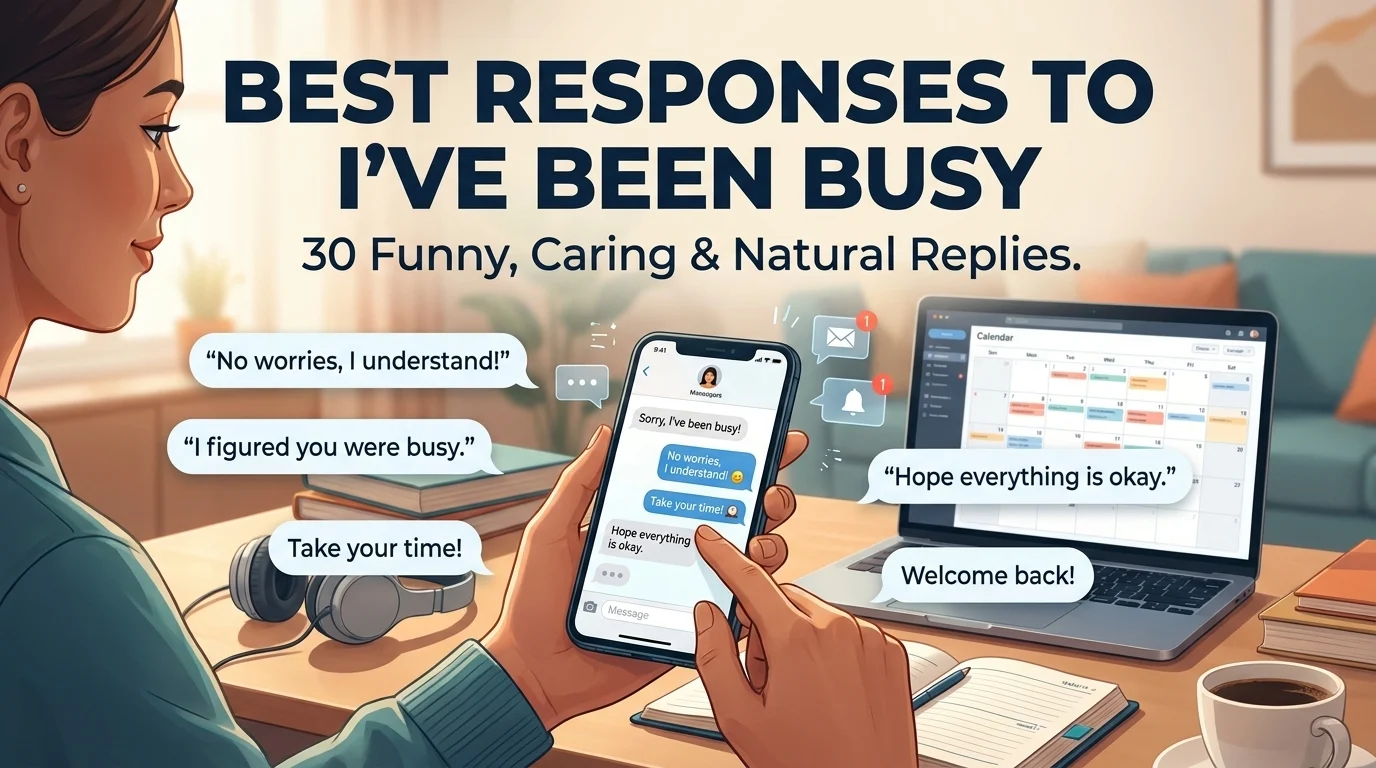
When someone says, “I’ve been busy,” they may simply be explaining why they were unavailable, slow to reply, or unable to make plans. The best response depends on the situation and your relationship with that person. You can be understanding, funny, supportive, casual, or simply acknowledge what they said without making them feel pressured.
Knowing the right response to “I’ve been busy” can help keep a conversation comfortable and positive. Whether you are replying to a friend, classmate, coworker, family member, or someone you know casually, a short and genuine message usually works best. Here are 30 natural responses you can use in different situations.
Quick Answer for Audience
A simple response to “I’ve been busy” is: “No worries! I understand. Hope everything is going well.” If you want something more casual, try “I figured you had a lot going on!” For a funny reply, you could say “Busy being productive, I see!”
1. Say “No Worries, I Understand”
This is one of the safest and most natural responses. It shows that you understand they have other responsibilities.
Best for: Friends, classmates, coworkers, and casual conversations.
Alternative: “No problem, I completely understand.”
Examples:
“ No worries, I understand. Hope everything is going well.”
“It’s okay! I know things can get busy.”
2. Say “I Hope Everything Is Okay”
Sometimes “I’ve been busy” means the person has had a lot happening. This response gives them room to explain if they want.
Best for: Someone you care about.
Alternative: “I hope everything has been going smoothly.”
Examples:
“I hope everything is okay on your side.”
“Sounds like you’ve had a lot going on. Hope you’re doing alright.”
3. Say “I Figured You Were Busy”
This response sounds relaxed and avoids putting pressure on the other person.
Best for: Casual conversations.
Alternative: “I guessed you had a lot going on.”
Examples:
“I figured you were busy, so I didn’t want to bother you.”
“I had a feeling you were caught up with things.”
4. Say “Take Your Time”
This is a thoughtful way to tell someone they do not need to rush.
Best for: Friends, family, or someone dealing with a busy schedule.
Alternative: “No rush at all.”
Examples:
“Take your time. Reply whenever you get a chance.”
“No rush—handle what you need to handle first.”
5. Give a Simple “It’s All Good”
Sometimes you do not need a long response. A short message can keep the conversation easygoing.
Best for: Casual texting.
Alternative: “All good!”
Examples:
“It’s all good, don’t worry about it.”
“All good! I understand.”
6. Say “Sounds Like You’ve Had a Lot Going On”
This acknowledges their situation without asking too many questions.
Best for: When someone has genuinely had a packed schedule.
Alternative: “Seems like you’ve had a busy week.”
Examples:
“Sounds like you’ve had a lot going on lately.”
“Looks like your schedule has been pretty full.”
7. Ask “How Have Things Been?”
If you want to continue the conversation, ask about their life instead of focusing on the delayed response.
Best for: Reconnecting with someone.
Alternative: “How have things been going?”
Examples:
“Busy, huh? How have things been?”
“Sounds hectic. How are things going now?”
8. Say “Glad You’re Doing Okay”
If their message suggests they have been overwhelmed, this can sound warm and supportive.
Best for: Caring conversations.
Alternative: “I’m glad to hear from you.”
Examples:
“Glad you’re doing okay despite being so busy.”
“It’s good to hear from you!”
9. Use a Lighthearted Reply
A little humor can make the conversation feel less serious.
Best for: Close friends and people who appreciate jokes.
Alternative: “Look who finally escaped the busy schedule!”
Examples:
“Busy being the CEO of everything, huh?”
“Your schedule really said, ‘No free time allowed.’”
10. Say “I Know the Feeling”
This creates a sense of understanding because everyone experiences busy periods.
Best for: Friends, classmates, and coworkers.
Alternative: “I’ve been there too.”
Examples:
“I know the feeling. Some weeks are just nonstop.”
“I totally get it. Things can get shocking sometimes.”
11. Say “Hope You Get Some Time to Relax”
Being busy can be tiring, so this response adds a little encouragement.
Best for: Someone with a demanding schedule.
Alternative: “Hopefully you get some downtime soon.”
Examples:
“Hope you get some time to relax after all that.”
“Don’t forget to give yourself a little break.”
12. Say “Thanks for Letting Me Know”
This works especially well when someone is explaining why they did not respond earlier.
Best for: Polite and straightforward conversations.
Alternative: “Thanks for explaining.”
Examples:
“Thanks for letting me know. I understand.”
“Appreciate the update!”
13. Say “No Need to Explain”
This can reassure someone that they do not have to justify being unavailable.
Best for: Supportive conversations.
Alternative: “You don’t have to explain yourself.”
Examples:
“No need to explain. Everyone gets busy.”
“You’re fine! You don’t have to justify being busy.”
14. Say “I’m Glad You Reached Out”
This shifts the focus toward reconnecting rather than the time that passed.
Best for: Reconnecting after a while.
Alternative: “It’s nice hearing from you again.”
Examples:
“I’m glad you reached out!”
“Good to hear from you again. Hope things are better now.”
15. Give a Funny “Welcome Back” Response
If the person disappeared for a while, a playful welcome-back message can work.
Best for: Close friends.
Alternative: “Welcome back to civilization!”
Examples:
“Welcome back! We were starting to wonder where you went.”
“Look who has returned from the land of busy schedules!”
16. Say “I Hope Things Calm Down Soon”
This shows empathy without demanding their attention.
Best for: Someone who is still busy.
Alternative: “Hopefully your schedule gets easier soon.”
Examples:
“Hope things calm down for you soon.”
“Sounds hectic. Hopefully you get a quieter week soon.”
17. Say “Focus on What You Need to Do”
This tells the person that their responsibilities are important.
Best for: Supportive friendships and everyday conversations.
Alternative: “Handle what you need to handle first.”
Examples:
“Focus on what you need to do. We can talk later.”
“Take care of your priorities first.”
18. Say “We Can Catch Up Later”
This is useful when you do not want the person to feel pressured to continue chatting.
Best for: Friends and casual contacts.
Alternative: “We can talk whenever you have time.”
Examples:
“No worries. We can catch up later.”
“Finish what you’re doing, and we’ll talk when you’re free.”
19. Say “Sounds Like a Busy Time”
This is neutral, polite, and easy to use in many situations.
Best for: General conversations.
Alternative: “Sounds like things have been hectic.”
Examples:
“Sounds like a busy time for you!”
“Seems like you’ve had a packed schedule.”
20. Ask “What Have You Been Busy With?”
If you are genuinely curious, this question can naturally continue the conversation.
Best for: Friends and people you know well.
Alternative: “What’s been keeping you so busy?”
Examples:
“What have you been busy with lately?”
“What’s been taking up most of your time?”
21. Say “Good to Know You’re Okay”
This works when you were wondering why someone had been unavailable.
Best for: Caring conversations.
Alternative: “I’m glad you’re alright.”
Examples:
“Good to know you’re okay. That’s what matters.”
“I’m glad everything is alright.”
22. Say “Don’t Stress About Replying Quickly”
This takes pressure away from texting.
Best for: Friends who apologize for delayed replies.
Alternative: “You don’t have to respond right away.”
Examples:
“Don’t stress about replying quickly. I understand.”
“No pressure to text back immediately.”
23. Use a Playful “Productive Person” Joke
If humor fits your relationship, gently joke about their productivity.
Best for: Friends and classmates.
Alternative: “Look at you getting things done!”
Examples:
“Okay, productivity champion!”
“Someone’s been seriously busy getting things done!”
24. Say “I Appreciate You Getting Back to Me”
This sounds thoughtful and respectful.
Best for: Polite or semi-professional conversations.
Alternative: “Thanks for getting back to me.”
Examples:
“I appreciate you getting back to me when you had time.”
“Thanks for taking a moment to reply.”
25. Say “Whenever You’re Free”
This makes it clear that the conversation can continue later.
Best for: Friends, classmates, and acquaintances.
Alternative: “Just message me when you have a free moment.”
Examples:
“Whenever you’re free, we can catch up.”
“Message me whenever you get some time.”
26. Say “Busy Happens”
This short phrase shows that you are not taking their absence personally.
Best for: Casual texting.
Alternative: “It happens!”
Examples:
“Busy happens. No worries!”
“It happens to everyone. Don’t worry about it.”
27. Say “I’m Here When You Have Time”
This is supportive without demanding immediate attention.
Best for: Close friends and supportive conversations.
Alternative: “I’ll be around whenever you’re free.”
Examples:
“I’m here whenever you have time to talk.”
“No pressure—I’ll be around when you’re free.”
28. Give a Short Funny Response
Sometimes a quick joke is all you need.
Best for: Playful friendships.
Alternative: “Busy or secretly living three lives?”
Examples:
“Busy? I’ll allow it!”
“Your calendar sounds more exciting than mine!”
29. Say “Hope You’re Taking Care of Yourself”
This goes beyond the conversation and shows genuine consideration.
Best for: Someone who seems extremely busy.
Alternative: “Make sure you’re looking after yourself too.”
Examples:
“Hope you’re taking care of yourself while staying busy.”
“Remember to rest when you can!”
30. Use a Warm All-Purpose Response
When you are unsure what tone to use, keep it simple, kind, and understanding.
Best for: Almost any situation.
Alternative: “No worries at all. Hope everything is going well.”
Examples:
“No worries! I understand you’ve been busy. Hope everything is going well.”
“That’s completely fine. Take care of what you need to, and we can catch up later.”
Frequently Asked Questions
What is a good response to “I’ve been busy”?
A simple response is, “No worries, I understand. Hope everything is going well.” It acknowledges their situation without creating pressure.
How do you respond to “I’ve been busy” in a funny way?
For a close friend, try something playful like, “Busy being the CEO of everything?” or “Welcome back from the land of busy schedules!”
What should I say if someone apologizes for being busy?
You can reassure them with, “No need to apologize. I completely understand.” This keeps the conversation positive and relaxed.
How do I respond if someone has been too busy to reply?
Try, “No worries! Reply whenever you have time.” This shows understanding while giving them space.
Is “No worries, I understand” a good response?
Yes. It is short, polite, and suitable for most everyday situations. You can add a question afterward if you want to continue the conversation.
Conclusion
The best responses to “I’ve been busy” depend on the situation, your relationship with the person, and the tone of the conversation. A simple “No worries, I understand” works in most situations, while funny replies can make conversations with close friends more relaxed.
The key is to respond naturally without making the other person feel guilty for having a busy schedule. Whether you choose a supportive, casual, funny, caring, or professional response, keeping it genuine and respectful will usually make the conversation easier and more comfortable.
LSI and NLP Keywords
responses to I’ve been busy, what to say when someone says they’ve been busy, replies to I’ve been busy, funny responses to I’ve been busy, best reply to I’ve been busy, how to respond to I’ve been busy, casual replies, supportive responses, understanding replies, funny text responses, delayed reply messages, busy schedule responses, conversation starters, texting responses, friendly replies, polite responses, caring messages, natural conversation replies

I am Ezekiel James, an experienced administrator dedicated to making communication easier. I manage helpful reply content, support quality standards, and ensure readers find clear, useful responses.