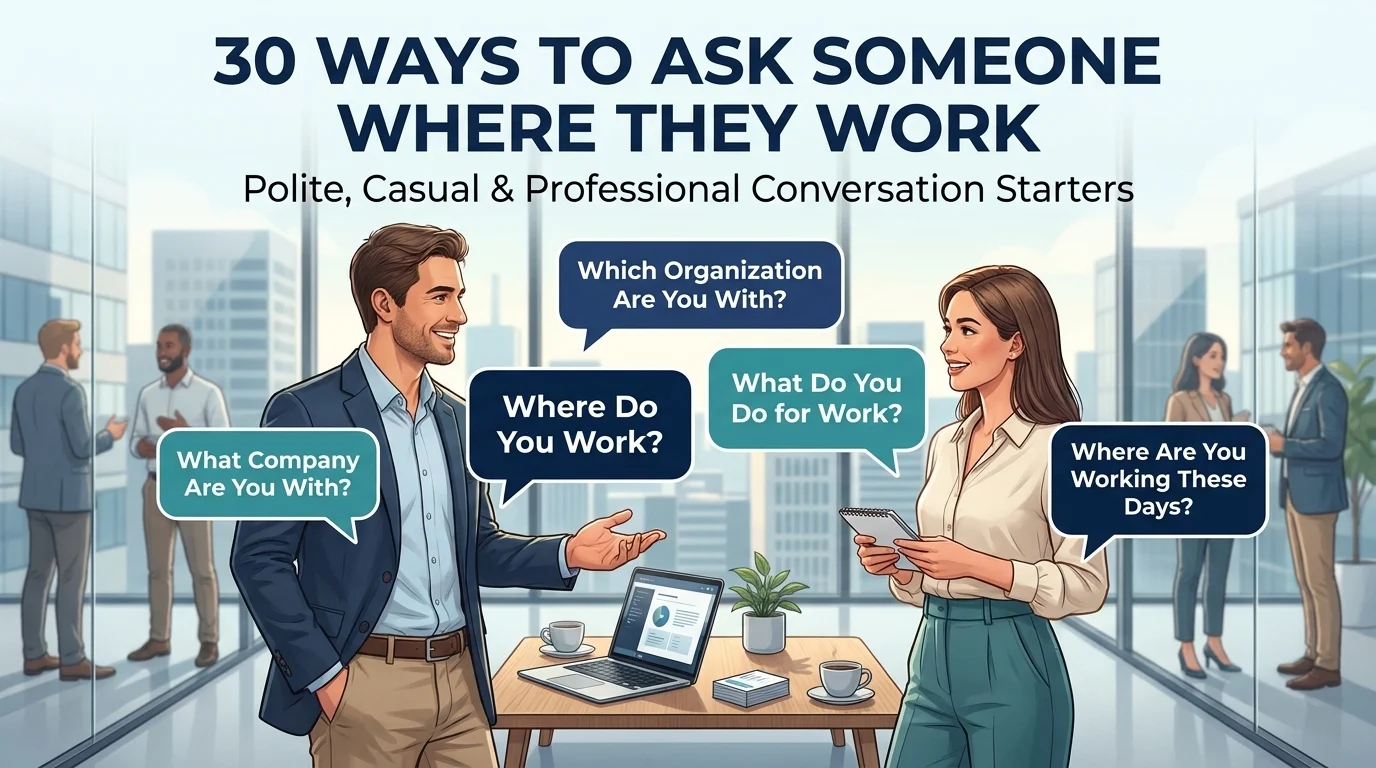
Asking someone where they work is a common part of getting to know people, whether you’re meeting someone new, chatting with a neighbor, attending a social event, or networking professionally. However, the way you ask can make a big difference. A direct question like “Where do you work?” is perfectly normal, but sometimes a friendlier, more casual, or more professional approach feels more natural.
The good news is that there are many ways to ask someone about their job without making the conversation feel awkward or intrusive. You can choose a casual question for everyday conversations, a polished expression for networking events, or a thoughtful question that invites someone to share more about their career. Below are 30 practical ways to ask where someone works, along with examples to help you choose the right wording for every situation.
Quick Answer for Audience
Here are some natural ways to ask someone where they work:
- “Where do you work?”
- “What company do you work for?”
- “Where are you working these days?”
- “Who do you work with?”
- “What organization are you with?”
- “Where do you work, if you don’t mind me asking?”
- “What do you do for work?”
- “Which company are you currently working at?”
- “Are you working locally or somewhere else?”
- “What kind of workplace are you part of?”
1. Where Do You Work?
Best for: Everyday conversations and meeting someone new.
Alternative: “Where are you employed?”
Examples:
“By the way, where do you work?”
“I don’t think I’ve asked you before. Where do you work?”
This is the simplest and most direct way to ask about someone’s workplace. It sounds natural in most casual conversations and is generally appropriate when you’re getting to know someone.
2. What Company Do You Work For?
Best for: Professional conversations and networking.
Alternative: “Which company are you with?”
Examples:
“What company do you work for, if you don’t mind me asking?”
“I’d love to know more about your work. What company do you work for?”
This question is useful when you want to know the name of someone’s employer rather than just their general occupation.
3. Where Are You Working These Days?
Best for: Catching up with friends, former classmates, or acquaintances.
Alternative: “What are you doing for work these days?”
Examples:
“It’s been a while! Where are you working these days?”
“Last time we talked, you were looking for a new job. Where are you working now?”
This expression feels relaxed and friendly. It’s especially helpful when you’re reconnecting with someone after a long time.
4. What Organization Are You With?
Best for: Formal introductions and professional networking.
Alternative: “Which organization do you represent?”
Examples:
“May I ask what organization you’re with?”
“What organization are you currently working with?”
This wording sounds polished and professional. It works well at conferences, business meetings, industry events, and professional gatherings.
5. Where Do You Work, If You Don’t Mind Me Asking?
Best for: Polite conversations with someone you don’t know well.
Alternative: “Would you be comfortable sharing where you work?”
Examples:
“Where do you work, if you don’t mind me asking?”
“If it’s okay to ask, which company are you working for?”
Adding a polite qualifier makes the question feel less intrusive. It also gives the other person room to decide how much information they want to share.
6. What Do You Do for Work?
Best for: Meeting new people and starting conversations.
Alternative: “What’s your profession?”
Examples:
“So, what do you do for work?”
“I’d love to hear about your career. What do you do for work?”
This question asks about someone’s occupation rather than the specific company they work for. It’s a good conversation starter because it lets the person decide whether to discuss their role, industry, or employer.
7. Which Company Are You Currently Working At?
Best for: Professional conversations and career-related discussions.
Alternative: “Where are you currently employed?”
Examples:
“Which company are you currently working at?”
“I noticed you’ve been busy with work lately. Which company are you with now?”
This phrasing is clear and specific. It’s particularly useful when you want to know someone’s current employer rather than a previous workplace.
8. Who Do You Work With?
Best for: Casual professional conversations.
Alternative: “Which company or team are you part of?”
Examples:
“Who do you work with these days?”
“Are you still with the same organization, or have you joined a new team?”
Depending on the context, this question can refer to someone’s employer, colleagues, or professional team. If you specifically want to know the company name, a more precise question may be clearer.
9. Where Are You Based for Work?
Best for: Professional networking and conversations about location.
Alternative: “Which office or location do you work from?”
Examples:
“Where are you based for work?”
“Are you based in the city, or do you work from another office?”
This is useful when the person’s work location matters, such as when discussing regional offices, remote work, or possible professional connections.
10. What Workplace Are You Part Of?
Best for: Friendly conversations when you want a softer tone.
Alternative: “Which organization do you work with?”
Examples:
“What workplace are you part of at the moment?”
“I’m curious about your career. What organization are you part of?”
This phrasing sounds approachable and open-ended. It works when you want to learn about someone’s professional environment without sounding overly formal.
11. Where Have You Been Working Lately?
Best for: Reconnecting with friends and acquaintances.
Alternative: “What job have you been doing lately?”
Examples:
“It’s great to see you again! Where have you been working lately?”
“We haven’t caught up in ages. Where have you been working?”
This question helps restart a conversation and gives the other person an easy opportunity to share career updates.
12. Which Business Do You Work For?
Best for: Asking about employment in a business or commercial setting.
Alternative: “Which firm employs you?”
Examples:
“Which business do you work for?”
“Are you working for a local business or a larger company?”
This is a straightforward way to ask about someone’s employer. It is especially appropriate when the conversation already involves businesses, industries, or professional services.
13. What Firm Are You With?
Best for: Professional services, consulting, finance, and legal networking.
Alternative: “Which firm do you currently work at?”
Examples:
“What firm are you with?”
“I work with several consulting professionals. What firm are you with?”
The word “firm” is commonly used for businesses such as consulting agencies, law practices, and accounting companies. It sounds natural when the context fits the industry.
14. Are You Working Somewhere Nearby?
Best for: Casual conversations with neighbors or people in your community.
Alternative: “Do you work around here?”
Examples:
“Are you working somewhere nearby?”
“Do you work in this area, or do you commute to another city?”
This question is useful when location is relevant to the conversation. It can lead naturally to discussions about commuting, local businesses, and the neighborhood.
15. Where Do You Go to Work?
Best for: Informal conversations about daily routines.
Alternative: “Where is your workplace located?”
Examples:
“Where do you go to work every morning?”
“Do you go to an office, or do you work from home?”
This wording can refer to someone’s physical work location rather than their employer’s name. It’s a good option when you’re interested in their daily routine.
16. Which Employer Are You With?
Best for: Formal or administrative conversations.
Alternative: “Who is your current employer?”
Examples:
“May I ask which employer you’re with?”
“Could you tell me who your current employer is?”
This phrasing is more formal and is best suited to situations where employment details are relevant. In casual conversations, simpler wording usually sounds more natural.
17. What Company Have You Joined?
Best for: Talking to someone who recently changed jobs.
Alternative: “Where did you end up working?”
Examples:
“Congratulations on the new role! What company have you joined?”
“You mentioned you were changing jobs. Where did you end up working?”
This question shows interest in the person’s career progress. It is especially appropriate when you already know they were job hunting or planning a career move.
18. Are You Still Working at the Same Place?
Best for: Catching up with someone whose job you already know about.
Alternative: “Have you changed jobs recently?”
Examples:
“Are you still working at the same place you were last year?”
“It’s been a while since we talked. Are you still with your previous company?”
This is a natural way to ask about someone’s current employment without asking them to repeat information you already know.
19. Where Do You Work Full-Time?
Best for: Conversations about employment arrangements.
Alternative: “What’s your main place of employment?”
Examples:
“Where do you work full-time?”
“Do you have a full-time position with one company, or do you work with several clients?”
Use this question when the distinction between full-time and other types of work is relevant. Avoid assuming that everyone has a traditional full-time job.
20. Which Team or Department Are You In?
Best for: Professional conversations when you know the organization.
Alternative: “What department do you work in?”
Examples:
“Which team or department are you in at the company?”
“Are you part of the marketing team or another department?”
This question is most useful when you already know the person’s employer and want to learn more about their role within the organization.
21. Where Are You Employed at the Moment?
Best for: Polite professional conversations.
Alternative: “Who are you currently working for?”
Examples:
“Where are you employed at the moment?”
“If you don’t mind sharing, where are you currently employed?”
This expression is clear and slightly formal. It works well when discussing careers, professional backgrounds, or employment changes.
22. What Company Are You Representing?
Best for: Conferences, trade shows, and business events.
Alternative: “Which organization are you representing today?”
Examples:
“What company are you representing at the conference?”
“Which organization are you representing during today’s meeting?”
This question is appropriate when someone is attending an event in a professional capacity. It focuses on the organization they represent in that setting, which may not always be their employer.
23. Do You Work for a Local Company?
Best for: Community conversations and local networking.
Alternative: “Is your workplace based around here?”
Examples:
“Do you work for a local company, or is it based somewhere else?”
“I’m getting to know businesses in the area. Do you work for a local organization?”
This question is friendly and can help start a conversation about local employment opportunities or shared professional interests.
24. What Industry Do You Work In?
Best for: Networking when you don’t need the company name immediately.
Alternative: “Which field do you work in?”
Examples:
“What industry do you work in?”
“Are you in technology, education, healthcare, or another field?”
This question focuses on the person’s professional field rather than their specific employer. It’s useful when you want to find common interests or professional connections without asking for personal employment details.
25. Are You Working Remotely or in an Office?
Best for: Conversations about work arrangements.
Alternative: “What’s your current work setup?”
Examples:
“Are you working remotely or going into an office these days?”
“Does your company let you work from home, or do you go to the workplace?”
This is a useful question when you’re interested in how someone works rather than just where they are employed.
26. Where Can I Find Your Professional Profile?
Best for: Networking and building professional connections.
Alternative: “Are you on LinkedIn?”
Examples:
“Where can I find your professional profile? I’d love to learn more about your work.”
“Are you on LinkedIn? It would be great to connect professionally.”
This approach can be helpful when you want to learn about someone’s professional background without asking them directly to name their employer. It also gives them control over what information they share.
27. What Organization Do You Work With?
Best for: Nonprofits, educational institutions, public services, and business settings.
Alternative: “Which organization are you affiliated with professionally?”
Examples:
“What organization do you work with?”
“Are you working with a nonprofit or another type of organization?”
This broad expression works for people employed by companies, charities, schools, and other institutions. It can also suit professional collaborations, although “work with” doesn’t always mean direct employment.
28. Where Are You Working Now Compared With Before?
Best for: Reconnecting with former colleagues or classmates.
Alternative: “How has your work situation changed?”
Examples:
“You were working at a school last time we spoke. Where are you working now?”
“Have you stayed in the same field, or have you moved to a different company?”
This question invites someone to share their career journey. It’s especially effective when you already know a little about their previous work.
29. May I Ask Where You Work?
Best for: Respectful introductions and conversations with new acquaintances.
Alternative: “Would you mind telling me where you’re employed?”
Examples:
“May I ask where you work?”
“Would you mind sharing which company you’re with?”
This is a simple, courteous way to ask about employment. It’s especially useful when you’re unsure whether the topic is appropriate or want to give the person an easy way not to answer.
30. What Do You Do, and Where Do You Work?
Best for: Getting-to-know-you conversations and professional introductions.
Alternative: “Could you tell me a little about your job and workplace?”
Examples:
“What do you do, and where do you work?”
“I’d love to learn more about your career. What’s your role, and which organization are you with?”
This question combines two related topics: someone’s occupation and their employer. It is useful when you want a fuller understanding of their professional background, but keep the tone conversational so it doesn’t feel like an interview.
Frequently Asked Questions
1. What is the most polite way to ask someone where they work?
A polite option is, “Where do you work, if you don’t mind me asking?” You could also say, “May I ask which company you’re with?” Both expressions show courtesy and leave room for the person to decline to share.
2. How do you casually ask someone about their job?
Try “What do you do for work?” or “Where are you working these days?” These questions sound relaxed and are suitable for conversations with friends, acquaintances, or people you’ve just met.
3. Is it rude to ask someone where they work?
Not usually. Asking about someone’s job is a common conversation starter, but context matters. If you don’t know the person well, use polite wording, avoid pressing for details, and respect their choice not to answer.
4. How do you ask someone where they work in a professional setting?
You can ask, “Which organization are you with?” or “What company do you work for?” At a networking event, you might also ask, “What industry do you work in?” to begin a broader professional conversation.
5. What’s the difference between asking where someone works and what they do?
“Where do you work?” asks about the person’s employer or workplace. “What do you do for work?” asks about their occupation, role, or profession. If you want to know both, you can ask about their job first and then follow up with the company name.
Conclusion
Knowing different ways to ask someone where they work can help you start conversations naturally, build professional connections, and get to know people without sounding awkward. From the straightforward “Where do you work?” to the more polished “Which organization are you with?”, the best expression depends on your relationship with the person and the situation.
For casual conversations, keep your wording simple and friendly. For networking, choose a more professional question. And whenever the topic feels personal, use a polite qualifier and respect the other person’s boundaries. Try one of these expressions the next time you’re making conversation, and let the discussion develop naturally.
LSI and NLP Keywords
ways to ask someone where they work, how to ask someone about their job, polite ways to ask about employment, professional networking questions, how to ask where someone works politely, questions to ask when meeting someone new, casual ways to ask about someone’s job, asking about someone’s workplace, professional conversation starters, how to ask what company someone works for, workplace conversation questions, job-related questions, professional introduction examples, how to start a networking conversation, asking about someone’s career, formal ways to ask about employment, conversation starters about work, polite questions about someone’s profession

I’m Isaiah Michael, a passionate writer at HowReplies, sharing thoughtful, practical, and creative reply ideas to help readers communicate clearly, confidently, and naturally in everyday conversations.