Introduction
Looking for the Best Responses to I Feel You? When someone says “I feel you,” they usually mean “I understand what you’re going through” or “I can relate to what you’re saying.” It can be a simple way to show empathy, agreement, or emotional support. The best response depends on whether you want to sound grateful, funny, casual, thoughtful, or supportive.
A natural reply doesn’t have to be complicated. Sometimes “Thanks, I appreciate that” is enough, while a close friend might deserve something more playful like “Then you already know the struggle!” Whether you’re replying in a text, social media chat, school conversation, or everyday discussion, these responses can help you keep the conversation comfortable and genuine.
Quick Answer
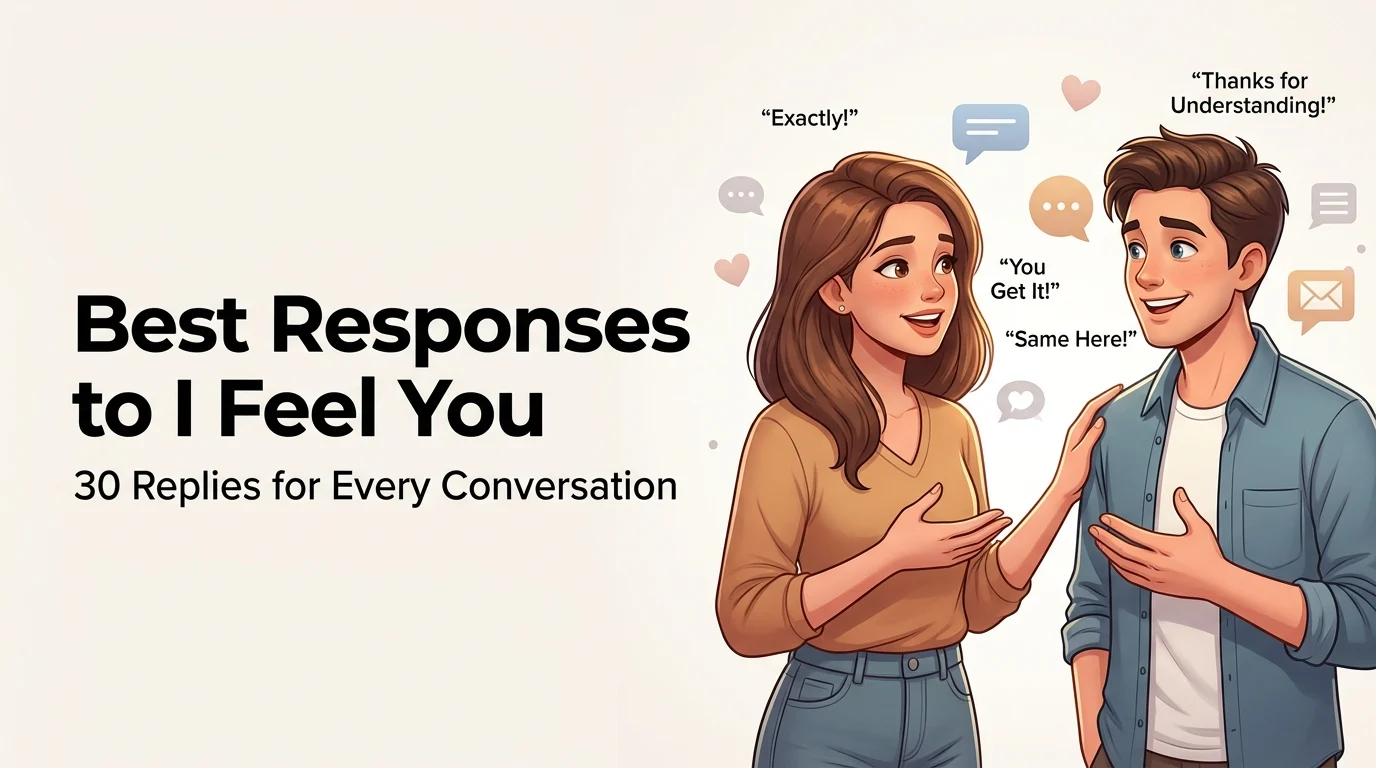
The best response to “I feel you” is usually “Thanks, I appreciate you understanding.” For a casual conversation, try “Exactly!” or “You get it!” If you want humor, say “Then you know the struggle!”
1. “Thanks, I Appreciate That”
Best for: A sincere and respectful conversation.
Alternative: “Thanks for understanding.”
Examples:
“Thanks, I really appreciate that.”
“It means a lot that you understand.”
This is one of the safest responses when someone is showing empathy.
2. “Exactly!”
Best for: Agreeing with someone who understands your point.
Alternative: “That’s exactly what I mean.”
Examples:
“Exactly! You completely get it.”
“Yes! That’s what I was trying to explain.”
It’s short, natural, and works well in texting.
3. “You Get It!”
Best for: Friends who understand your situation.
Alternative: “Finally, someone understands!”
Examples:
“You get it! I knew you would.”
“Exactly—you understand the situation.”
This response creates a sense of connection.
4. “Then You Know the Struggle”
Best for: Lighthearted conversations.
Alternative: “Then you already know!”
Examples:
“Then you know exactly what I’m talking about.”
“Yep, now you understand the struggle!”
It adds a playful touch without changing the meaning.
5. “I’m Glad You Understand”
Best for: More thoughtful conversations.
Alternative: “It’s nice knowing someone understands.”
Examples:
“I’m glad you understand where I’m coming from.”
“Thanks for seeing it from my side.”
This response works particularly well when you’re explaining something personal or frustrating.
6. “Same Here”
Best for: When you also relate to what the other person said.
Alternative: “I feel you too.”
Examples:
“Same here! I completely understand.”
“Honestly, I feel the same way.”
It turns the conversation into a shared experience.
7. “We’re on the Same Page”
Best for: Agreement and mutual understanding.
Alternative: “We definitely see it the same way.”
Examples:
“Looks like we’re on the same page.”
“Exactly—we both understand the situation.”
This sounds natural and confident.
8. “That’s What I’m Saying!”
Best for: Casual conversations with friends.
Alternative: “You said it perfectly!”
Examples:
“That’s what I’m saying! You understand me.”
“Exactly! You finally put it into words.”
This energetic response keeps the conversation moving.
9. “I Knew You’d Understand”
Best for: Close friends.
Alternative: “I knew you would get it.”
Examples:
“I knew you’d understand without me explaining everything.”
“That’s why I told you—you always get it.”
It highlights trust and familiarity.
10. “Thank You for Listening”
Best for: When someone has patiently heard you out.
Alternative: “I appreciate you listening.”
Examples:
“Thanks for listening to me.”
“I really appreciate you hearing me out.”
Sometimes acknowledgment is more meaningful than a clever comeback.
11. “You’re Not Wrong”
Best for: Agreeing while keeping the tone casual.
Alternative: “Honestly, you’re right.”
Examples:
“You’re not wrong—that’s exactly how it feels.”
“I can’t argue with that.”
This works especially well in relaxed conversations.
12. “Right?!”
Best for: Excited agreement.
Alternative: “Exactly, right?”
Examples:
“Right?! I thought I was the only one.”
“Exactly! You understand what I mean.”
The short response makes it perfect for texting.
13. “Now You Understand”
Best for: Playful conversations.
Alternative: “Welcome to my world!”
Examples:
“Now you understand why I was complaining.”
“Welcome to my side of the story!”
This gives an empathetic conversation a little humor.
14. “You’ve Been There Too”
Best for: Shared experiences.
Alternative: “You know the feeling.”
Examples:
“You’ve been through it too, so you understand.”
“That’s why you get exactly how I feel.”
It’s a natural response when both people have experienced something similar.
15. “I Needed to Hear That”
Best for: When someone’s empathy makes you feel supported.
Alternative: “That actually helps a lot.”
Examples:
“I really needed someone to understand.”
“Thanks—that makes me feel less alone in this.”
This response acknowledges the emotional support behind “I feel you.”
16. “You’re the Best”
Best for: A warm response to a supportive friend.
Alternative: “I appreciate you!”
Examples:
“You’re the best for understanding.”
“Thanks for always getting where I’m coming from.”
Keep it genuine and appropriate to your relationship.
17. “I Knew I Wasn’t Alone”
Best for: Shared frustrations or experiences.
Alternative: “Good to know I’m not the only one.”
Examples:
“I knew someone else would understand.”
“Honestly, it helps knowing I’m not the only person who feels that way.”
This can make a difficult conversation feel more connected.
18. “Exactly How I Feel”
Best for: Strong agreement.
Alternative: “You described it perfectly.”
Examples:
“That’s exactly how I feel.”
“You put my thoughts into words.”
It’s especially useful when someone summarizes your feelings accurately.
19. “That Means a Lot”
Best for: Sincere emotional support.
Alternative: “I really appreciate that.”
Examples:
“That means a lot coming from you.”
“Thanks for understanding—it genuinely means a lot.”
This response shows appreciation without overexplaining.
20. “We’re in This Together”
Best for: Friends facing a shared challenge.
Alternative: “We’ve got each other.”
Examples:
“Exactly. We’re in this together.”
“We’ll figure it out together.”
It shifts the conversation from frustration toward encouragement.
21. “Finally, Someone Gets Me”
Best for: Playful conversations.
Alternative: “Someone finally understands!”
Examples:
“Finally, someone gets what I’m saying.”
“I knew you’d understand me.”
This can sound funny and dramatic in a friendly text.
22. “You Understand Me Better Than Most”
Best for: Close friendships.
Alternative: “You really get me.”
Examples:
“You understand me better than most people do.”
“That’s why I can talk to you about this.”
Use this when you genuinely want to recognize someone’s understanding.
23. “I’m Glad We Agree”
Best for: A discussion where both people share the same opinion.
Alternative: “Glad we’re thinking alike.”
Examples:
“I’m glad we agree on this.”
“Looks like we’re thinking the same way.”
This keeps the response simple and positive.
24. “That’s Exactly It”
Best for: Someone correctly identifying your point.
Alternative: “You nailed it.”
Examples:
“That’s exactly it—I couldn’t explain it better.”
“You nailed exactly what I was trying to say.”
It’s a natural way to confirm someone’s understanding.
25. “You Said It!”
Best for: Casual agreement.
Alternative: “My thoughts exactly!”
Examples:
“You said it! That’s exactly my point.”
“My thoughts exactly—I couldn’t have said it better.”
This works especially well in group chats.
26. “I Appreciate You Getting It”
Best for: A supportive and friendly conversation.
Alternative: “Thanks for understanding where I’m coming from.”
Examples:
“I appreciate you getting what I mean.”
“Thanks for understanding my perspective.”
It’s slightly more thoughtful than a basic “thanks.”
27. “That’s Why We’re Friends”
Best for: Close friends and playful conversations.
Alternative: “This is why you’re my favorite.”
Examples:
“That’s why we’re friends—you always understand.”
“See? This is why I can talk to you.”
Keep this one for relationships where the friendly tone is already established.
28. “You Understand Without Me Explaining”
Best for: Someone who knows you well.
Alternative: “You already know.”
Examples:
“You understand without me having to explain everything.”
“You already know exactly what I mean.”
This highlights how comfortable the conversation feels.
29. “Thanks for Being Understanding”
Best for: A serious or respectful conversation.
Alternative: “I really value your understanding.”
Examples:
“Thanks for being so understanding about this.”
“I appreciate you giving me a chance to explain.”
This is a mature response when the conversation matters.
30. “You Really Get It”
Best for: A warm, all-purpose response.
Alternative: “I’m glad you understand.”
Examples:
“You really get what I’m trying to say.”
“Thanks—you completely understand where I’m coming from.”
It’s simple, natural, and suitable for many different situations.
FAQs About the Best Responses to “I Feel You”
1. What does “I feel you” mean?
“I feel you” usually means “I understand you,” “I relate to what you’re saying,” or “I understand how you feel.” The exact meaning depends on the conversation.
2. What is the best response to “I feel you”?
A simple response such as “Thanks, I appreciate you understanding” works in most situations. If you agree with the person, “Exactly!” is another natural choice.
3. What is a funny response to “I feel you”?
You could say “Then you know the struggle!” or “Finally, someone gets it!” These responses keep the conversation light and playful.
4. How do I respond to “I feel you” over text?
Short replies usually work best. Try “Exactly!”, “You get it!”, “Same here,” or “Thanks, I appreciate that.”
5. Can “I feel you” mean agreement?
Yes. In casual conversation, “I feel you” can express both understanding and agreement. The surrounding context usually makes the intended meaning clear.
Conclusion
Finding the Best Responses to I Feel You doesn’t have to be complicated. Your ideal reply depends on the tone of the conversation and how well you know the other person. A simple “Thanks, I appreciate that” works for sincere support, while “Exactly!” or “You get it!” fits casual conversations.
If you want to add humor, try a playful response such as “Then you know the struggle!” The most important thing is to respond naturally and match the other person’s energy. A genuine reply can turn a simple expression of understanding into a stronger, more meaningful conversation.

I’m Amelia Jane, a passionate writer who loves creating helpful and thoughtful replies. I focus on making conversations easier by sharing simple, natural, and meaningful responses for everyone.